


Our partners











Designed for you.
Discover the Rise: personalised support that restores natural movement for people with drop foot.
Sound familiar?
Many people with drop foot find their brace uncomfortable. The most common complaints we hear are:

The plate pressing against the foot sole.
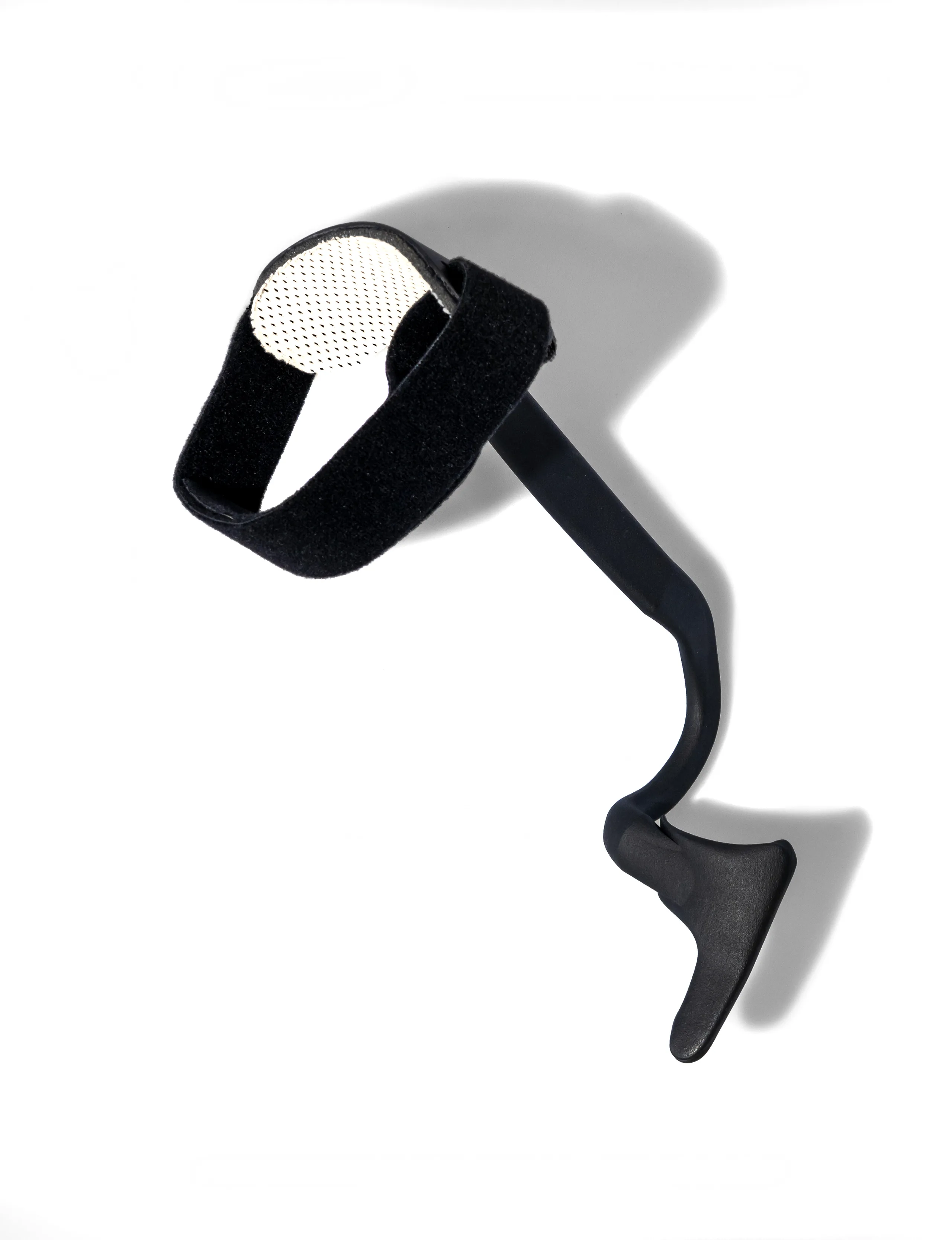
The Rise does not have a footplate and is not placed inside your shoe. It rests on top of the shoe, between the tongue and the laces.
The brace is stiff and I cannot move my ankle.
The Rise moves with your ankle through a flexible hinge. The support is personalised, while your ankle moves freely.
The brace is heavy.
The Rise weighs less than 200 grams, so taking a step stays easy.
What makes the Rise different?
Compare the Rise with other braces.
Designed by someone who has drop foot himself

Since an accident in 2014 I have had drop foot myself. That is why I developed the Rise. I wear it every day.
How the Rise works
Try it out?
You put on a Rise in your own shoe and walk a stretch with it. About half an hour. Free.
Rather call or message us yourself?+31 20 210 1198 or WhatsAppYou can call us Monday to Friday, 10:00 to 16:00.
When the Rise is suitable
Probably yes
- You have drop foot.
- You can stand on your toes or move your foot downwards.
- You can put on your own shoes and tie your laces.
Probably not
- Your calf or toes cramp strongly, or your foot is stuck pointing down.
- Your knee gives way when you stand, or you walk with bent knees.
- You have poor circulation in your legs, for example because of diabetes.
If in doubt, an orthotist can always help you judge whether the Rise suits you.
Frequently asked questions
What happens after I send my request?
We will call you within two working days, from +31 20 210 1198. In that call we pick a time and a place for your try-out together.
Does trying it commit me to anything?
No, a try-out is entirely without obligation.
Where can I try it?
In Amsterdam, or at an orthotist near you. On the phone we look for the place closest to you.
Is the Rise reimbursed if I already have a brace?
The Rise is covered by the basic health insurance in the Netherlands. If you have already had a brace reimbursed, the orthotist finds out for you whether a new request is possible, before you order anything. You can always try it first.
Do I need a referral?
Not for a try-out. For your own Rise you usually do: your rehabilitation doctor, neurologist or orthopaedic surgeon can refer you to an orthotist. The orthotist tells you what is needed in your case.
Can I stay with my own orthotist?
Often, yes. The Rise is fitted by orthotists we work with. Does your orthotist not work with the Rise yet? Then we get in touch with them.
Which shoes does the Rise fit?
Low lace-up shoes that stay below your ankle, like most sneakers. The footplate sits between the tongue and the laces, which is why laces are needed. The Rise does not work with slip-ons, sandals, boots or high-top shoes, and it does not work without shoes. In consultation with the orthotist, the Rise can be supplied together with orthopaedic shoes or, for example, shoes with velcro straps.
Do I feel the footplate on my foot?
You feel light pressure on top of your foot. That is why the footplate is made to a 3D scan of your foot. That way the pressure is spread well and the Rise is comfortable to wear all day.
How long does the Rise last?
The Rise lasts two years, and we give a warranty on that.
How do I get my own Rise?
First you come and try it. Then an orthotist checks whether the Rise suits your drop foot and arranges the request with your insurer. A 3D scan is made of your leg and foot, on which we print your Rise. The orthotist adjusts it to you and shows you how to put it on and take it off.
How long until I have my own Rise?
Provided you already have a referral, it takes two to three weeks until you have your own Rise. That can differ a little per orthotist.
I live in Belgium. Is it available there too?
Yes. In Belgium you can go to Brace2U in Boutersem (near Leuven) and to Vigo in Wetteren (near Ghent). Send the form and we will call you to find a place nearby.
Is your question not here? Call or message us.+31 20 210 1198 or WhatsAppYou can call us Monday to Friday, 10:00 to 16:00.